Skip to content
Choosing between a 20mm and 30mm kitchen worktop is usually more about appearance, budget and kitchen design than finding one universally better option.
A 20mm worktop creates a slimmer, more contemporary look, while a 30mm worktop has a heavier and more traditional appearance. Both thicknesses can be suitable for kitchen worktops when the material is correctly fabricated, supported and installed.
Choose a 20mm worktop for a slim, modern appearance, lower material weight and potentially lower cost. Choose 30mm when you want a more substantial edge, stronger visual presence or a traditional stone-worktop appearance. Thickness alone does not determine quality, and neither option removes the need for proper cabinet support, reinforcement around cut-outs and professional installation.
For engineered quartz and mineral surfaces, 20mm and 30mm are widely available standard options. Caesarstone, for example, offers its quartz, mineral and advanced fusion surfaces in both thicknesses.
Other materials may provide additional choices. Silestone is available in 12mm, 20mm and 30mm, while Dekton is manufactured in several thicknesses for different applications.
Availability still varies by manufacturer, material and colour, so check the exact slab before finalising the kitchen design.
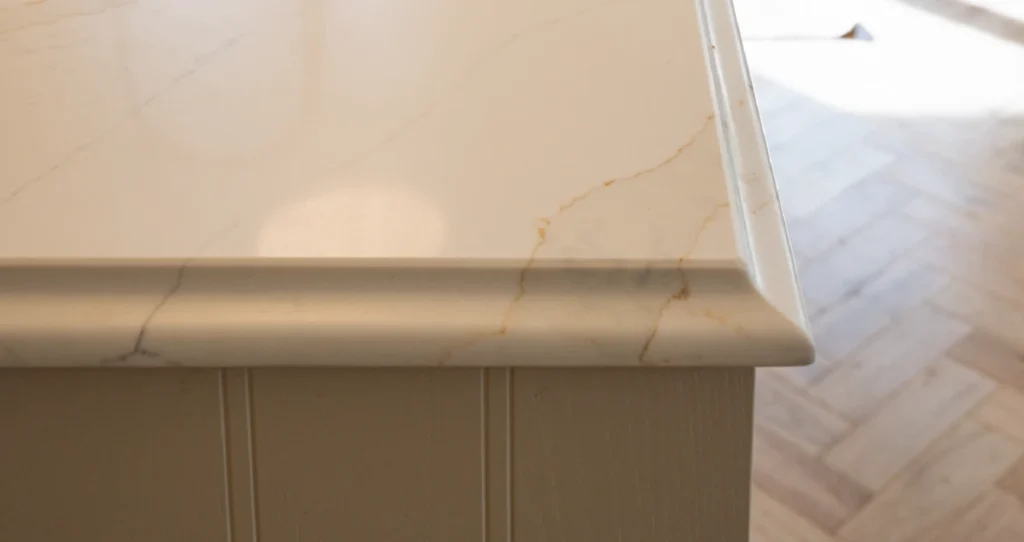
The physical difference is only 10mm, but it can noticeably change the finished appearance.
A large kitchen can usually accommodate either thickness. In a smaller kitchen, a slim surface may help the cabinetry feel lighter, although this depends on the colours and overall design.
A 30mm slab contains more material and may offer different support possibilities, but thickness should not be treated as the only measure of strength.
Both 20mm and 30mm worktops need suitable cabinet support. Cambria’s technical specification states that both 2cm and 3cm quartz surfaces must be supported and should not be treated as structural support materials themselves.
The risk of damage is also affected by:
A properly installed 20mm worktop is suitable for normal kitchen use. Larger overhangs, breakfast bars and unsupported sections may need brackets, steel supports or another approved reinforcement system.
The fabricator should calculate support requirements using the selected material manufacturer’s guidance.
The worktop should not be relied upon as the sole support for a heavy hob.
The hob must be fitted according to the appliance manufacturer’s instructions, with appropriate cabinet rails, brackets or supporting structures where required.
The area around a hob cut-out is one of the more vulnerable parts of a worktop because material has been removed. Correct cut-out dimensions, corner radiuses, cabinet preparation and support are more important than simply choosing the thickest slab.
A 30mm worktop will generally cost more because it uses more material and is heavier to handle. Caesarstone also notes that thicker quartz slabs normally command a premium.
However, the worktop thickness is only one part of the quotation. The final cost can also depend on:
A 20mm worktop may be the more economical option, but the saving varies by project.
A 20mm worktop is often chosen for contemporary and minimalist kitchens because its slimmer edge works well with flat-fronted or handleless cabinets.
It can be particularly effective with:
Cambria similarly describes 2cm surfaces as creating a sleek, modern appearance, while 3cm surfaces provide a bolder visual profile.
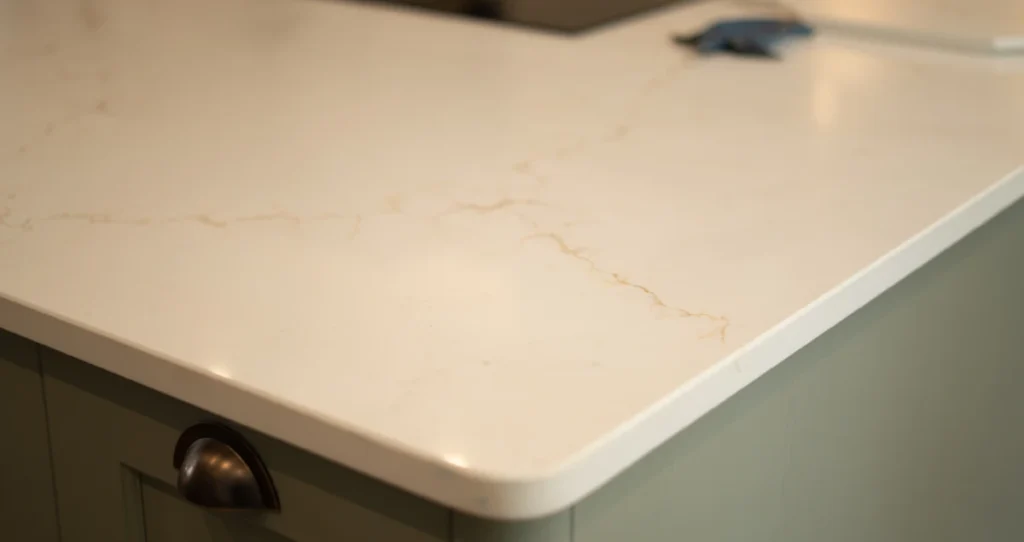
A 30mm worktop often works well with:
The thicker edge can feel more proportionate alongside detailed or heavily framed cabinets.
However, this is a design preference rather than a strict rule. A 20mm surface can also create an elegant contrast in a traditional kitchen.
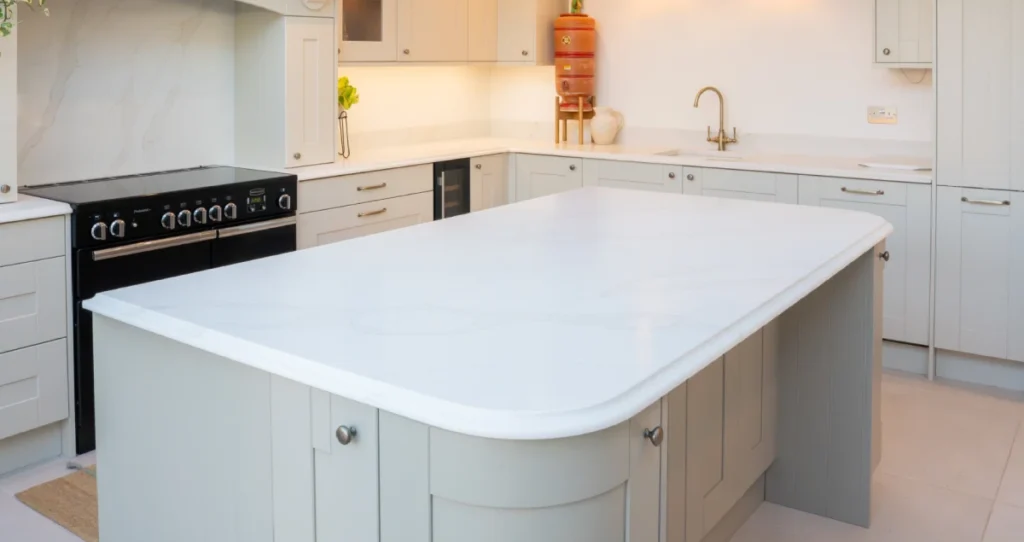
Both can work successfully.
Choose 20mm when you want the island to feel slim and contemporary. Choose 30mm when the island is intended to have more visual weight or become the main feature of the room.
The decision should also consider:
A large overhang may need reinforcement regardless of slab thickness. Manufacturer limits vary, so the support design must be confirmed by the fabricator.
Yes, but the edge is often built up rather than produced from a solid 40mm slab.
A mitred or laminated edge can create the appearance of a thicker worktop while using a thinner main surface. Caesarstone notes that a deeper-looking edge can be created even when the original slab is relatively slim.
Built-up edges are commonly used for:
The joints and pattern alignment need careful fabrication, particularly with strongly veined materials.
A 12mm surface can create an exceptionally slim, architectural appearance. It is available in selected engineered and sintered products, including parts of the Silestone and Dekton ranges.
A thinner surface may require a carefully designed support system, depending on the material, cut-outs and layout.
Do not assume that every 12mm slab can be installed using the same method as a 20mm or 30mm worktop. The fabricator should follow the technical requirements for the exact product.
Yes. When the same cabinets are used, a 30mm worktop finishes 10mm higher than a 20mm worktop.
This can affect:
The difference is small, but it should be considered when replacing an existing worktop or designing around fixed features.
Yes, where the materials and fabrication system allow it.
For example, a kitchen might use:
Cosentino specifically notes that different thicknesses can be combined across worktops, splashbacks and other applications while retaining the same colour and finish.
Mixing thicknesses should look intentional and must be planned before fabrication.
Neither option is automatically higher quality. The correct decision is the one that suits the material, cabinetry and proportions of the room.
Yes. A 20mm worktop is suitable for normal kitchen use when it is correctly fabricated, supported and installed. Additional reinforcement may be required around large cut-outs, overhangs or unsupported sections.
A 30mm slab contains more material, but the performance of the completed worktop also depends on cabinet support, cut-outs, overhangs, joints and installation. Thickness alone does not guarantee that damage cannot occur.
It is generally less expensive than the same surface in 30mm because it uses less material and weighs less. The exact saving depends on the supplier, colour and fabrication requirements.
Both are commonly used for quartz worktops. Choose 20mm for a slim appearance and 30mm for a thicker visual profile. Confirm support and edge requirements with the fabricator.
Not necessarily. It can give a large island greater visual weight, but a 20mm island may suit a minimalist design. Overhang support should be calculated separately from the aesthetic thickness choice.
Yes, although thinner matching materials may also be available. Using different thicknesses can reduce weight and cost while maintaining a coordinated appearance.
Both 20mm and 30mm kitchen worktops are practical choices. The main difference is how they affect the appearance, weight and cost of the finished kitchen.
Choose 20mm for a slim, modern and understated result. Choose 30mm for a thicker, more substantial edge that works particularly well with traditional cabinetry and statement islands.
View both options as full-size installations where possible, and ask the fabricator to confirm support requirements, cut-out details and the final cost before placing an order.
View both options as full-size installations where possible, and ask the fabricator to confirm support requirements, cut-out details and the final cost before placing an order.