Skip to content
Dekton worktops have built a bit of a reputation for being “almost indestructible”. And to be fair, they are incredibly tough compared to most kitchen surfaces. But even then, people still ask the same question once it is installed:
How do you actually clean it properly without ruining it over time?
The honest answer is that it is simple, but there are a few small things that make a big difference.
For everyday cleaning, you will not need anything special. But when it comes to grease, limescale or those annoying dried stains, knowing what to do—and what not to do—saves you a lot of hassle later.
If you just want the quick version, here it is.
For day-to-day cleaning:
That is genuinely enough for most kitchens.
Because Dekton is non-porous, spills do not soak in like they might with natural stone. They just sit on the surface. So as long as you wipe things up within a reasonable time, you are not going to run into problems.
A lot of people overthink this part, but it really does not need to be complicated.
If you prefer using a proper cleaner instead of just soap and water, go for something pH-neutral. That is the safest option long term.
You do not need anything aggressive for regular use.
Safe options:
Use occasionally, not daily:
The main thing is not leaving strong products sitting on the surface. That is where most issues start.
If you are cleaning regularly, even using a simple worktop cleaner kit, like the ones we supply at Mo’s Stonex, just makes life easier and keeps things consistent.
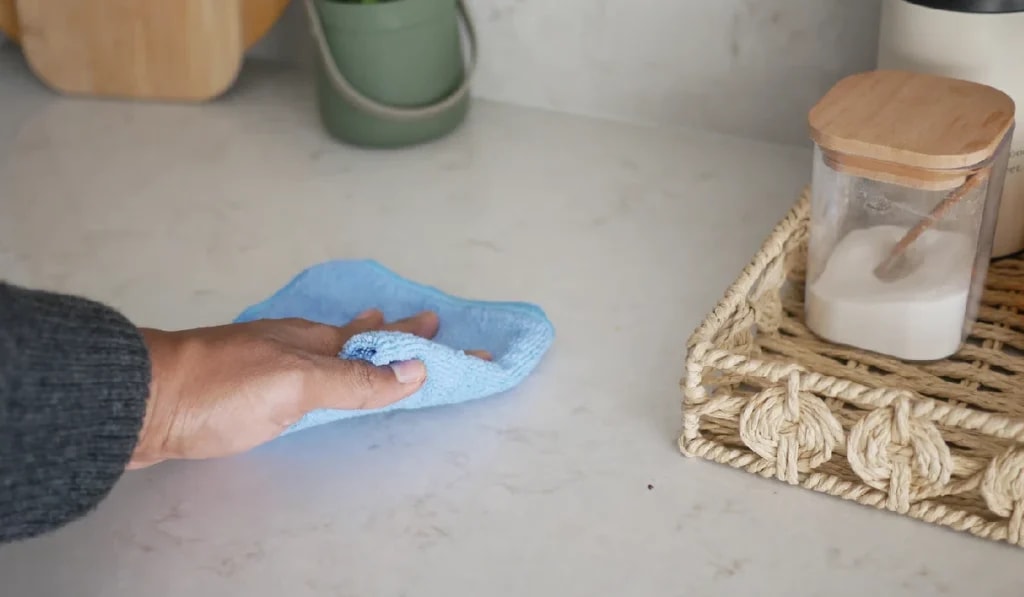
Most stains come off without much effort, but some need a slightly different approach.
Here is how to deal with the usual ones:
Use a standard kitchen cleaner or something slightly alkaline. Let it sit for a minute, then wipe clean.
Warm water and washing-up liquid usually do the job. If not, use a mild descaler or a stronger cleaner—just rinse afterwards.
This is common in UK kitchens. A mix of water and vinegar works well. Just do not leave it on too long—rinse and dry properly.
Carefully scrape it off first with a plastic scraper or blade, then clean the surface as normal.
A ceramic hob cleaner or glass cleaner usually brings the finish back nicely.
It is not about using stronger and stronger chemicals—it is more about using the right method for each type of stain.
Even though Dekton is extremely durable, there are a few habits worth avoiding.
None of these will instantly ruin your worktop, but over time they can affect the finish—especially around edges.
This is the part that often gets overlooked.
Dekton does not need sealing, polishing or anything like that. But a bit of basic care goes a long way.
For example:
It is less about “maintenance” and more about avoiding small things that build up over time.
If you are still deciding whether Dekton is the right choice, it is worth reading our full guide on Why Dekton Worktops Are the Future of Kitchen Surfaces—it explains where it really stands compared with other materials.
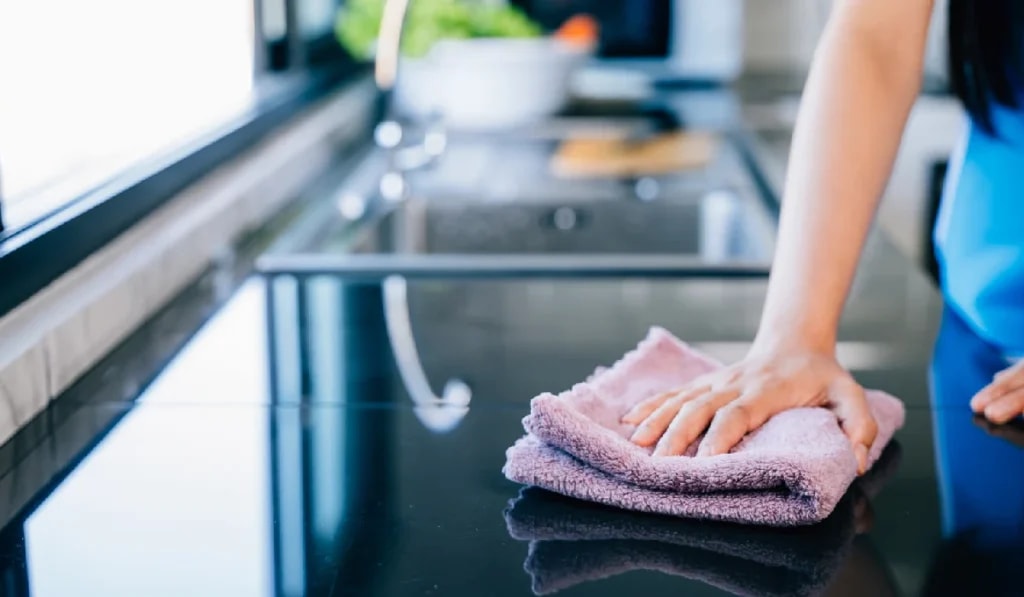
Yes, but only diluted—and always rinse it off afterwards.
Yes, especially for limescale, but again, do not leave it sitting too long.
Not really. pH-neutral products are enough, but specialised cleaners just make it easier.
A lot of people only start researching cleaning after installation, but it actually helps to understand how Dekton compares before choosing it.
For example:
If you are weighing up the pros and cons overall, this guide is worth a read: Pros and Cons of Dekton Kitchen Worktops.
If you already have Dekton, you will know how practical it is day to day. And if you are still thinking about it, this low-maintenance side of things is one of the main reasons people go for it.
At Mo’s Stonex, we supply and install Dekton, quartz and granite worktops across the UK, all made to measure depending on your space.
If you want advice, samples or just a rough quote, feel free to reach out. We are always happy to help—even if you are still just exploring options.