 Skip to content
PRESS RELEASE
The Cleaner Cut
United Kingdom - 22 October 2026
There is a particular pleasure in a well-made kitchen worktop: the cool weight of stone beneath the palm, the way morning light settles into its veining, the quiet confidence of a surface built to outlast the trends around it. For most of us, that is where the story of a worktop begins and ends — at the moment it arrives, polished, in our homes.
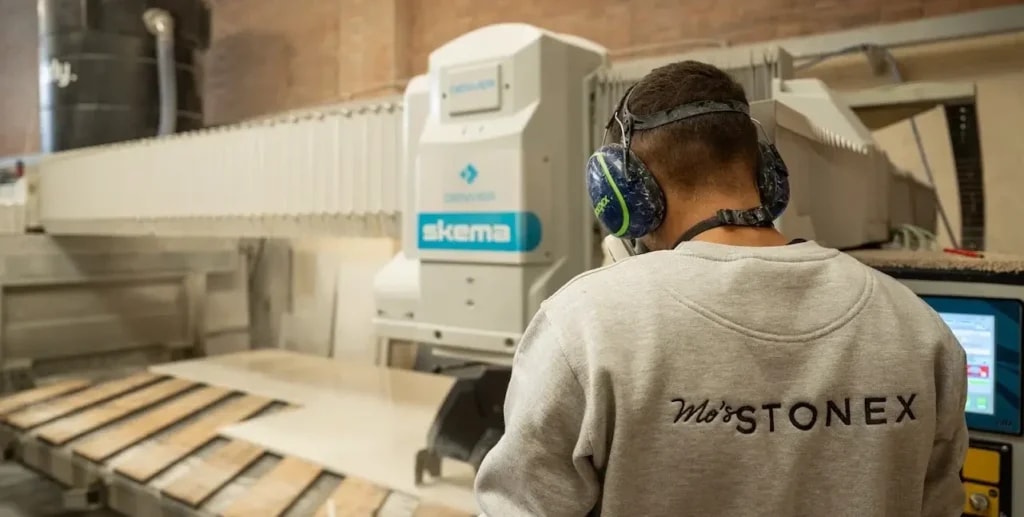
Yet every slab carries a longer history. Before it reaches a kitchen it is measured, cut, ground and polished by hand. And for a generation of British stonemasons and fabricators, that work has come at a cost the rest of us rarely see.
A hazard hidden in the dust
Silica occurs in several forms and is present naturally in materials such as sand, granite and quartz. The health concern discussed here relates specifically to crystalline silica. In a finished, undisturbed worktop, it does not present an inhalation risk. The risk arises when materials containing crystalline silica are cut, ground or polished without effective controls, releasing a fine airborne dust known as respirable crystalline silica, or RCS. Repeated exposure can scar the lungs, causing silicosis, for which there is no cure. RCS exposure is also linked to lung cancer and chronic obstructive pulmonary disease. The Health and Safety Executive has described silica dust as the greatest risk to construction workers after asbestos.
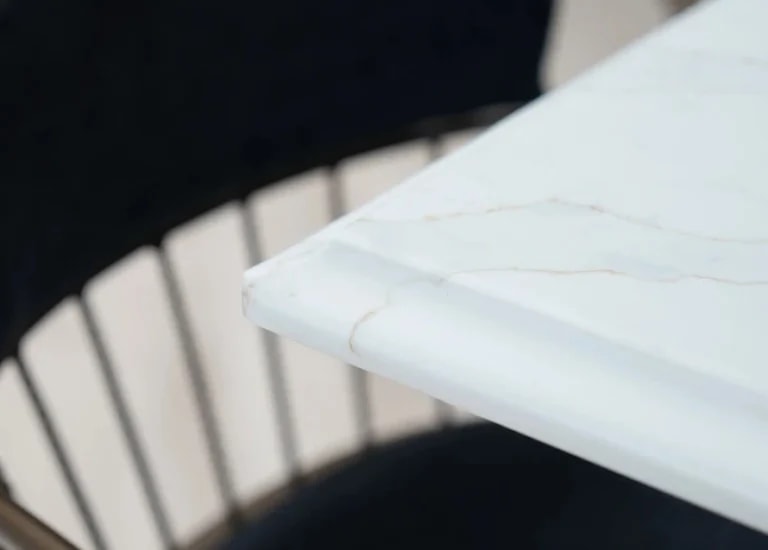
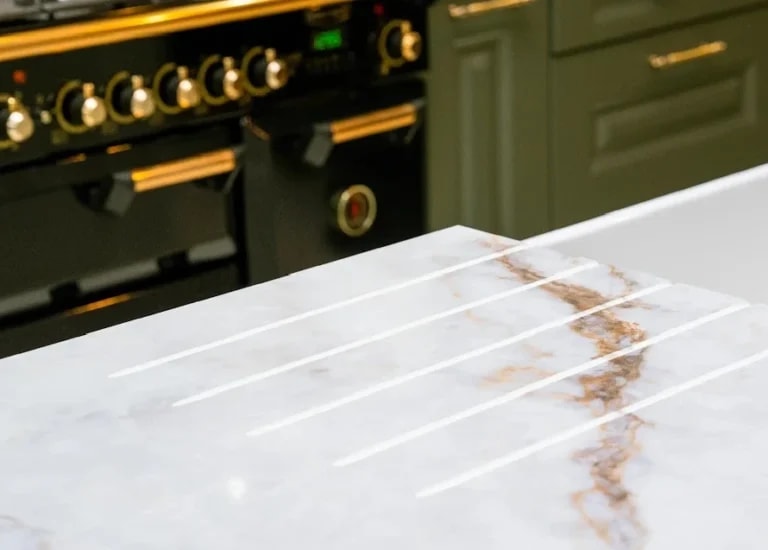
What has changed is the material itself. Engineered “quartz” worktops, prized through the 2010s for their flawless finish, can contain up to ninety per cent crystalline silica or more, far above the five to forty per cent typical of natural granite and marble.² When cut without effective controls, such materials can generate high levels of RCS dust. Where silicosis once took decades to appear, clinicians have begun to see it in fabricators still in their thirties.
The scale is sobering. A UK parliamentary group has estimated that some 600,000 workers are exposed to silica dust each year.³ In Australia, a 2022 study found that more than one in five stonemasons — 22.4 per cent — had been diagnosed with silicosis.
A global reckoning
Australia acted first. From July 2024 it banned the manufacture, supply and use of engineered stone under the relevant legal definition, and from January 2025 prohibited its import. Porcelain and sintered stone were excluded from the ban and sit in different material categories, although they still require appropriate dust controls during fabrication. In Britain, regulators have moved more cautiously but unmistakably: in 2026 the HSE deemed the dry cutting of engineered stone unacceptable and began a programme of workshop inspections.
It is worth being clear-eyed about where the risk falls. The concern described here is exposure to RCS dust during fabrication and fitting. A finished, installed quartz worktop is stable in normal household use and is not the source of the occupational risk discussed in this article. That risk falls overwhelmingly on the people who cut, grind and polish these materials. But that distinction is precisely the point. A beautiful kitchen should not depend on someone else’s lungs.
PRECISION & ACCURACY
CNC machinery ensures accurate, consistent fabrication.
Shorter Lead Times
In-house fabrication reduces delays and dependencies.
Fabricated in Britain
Made locally by skilled craftspeople.
Sustainable Process
Reducing waste, water use and transport.
The considered alternative
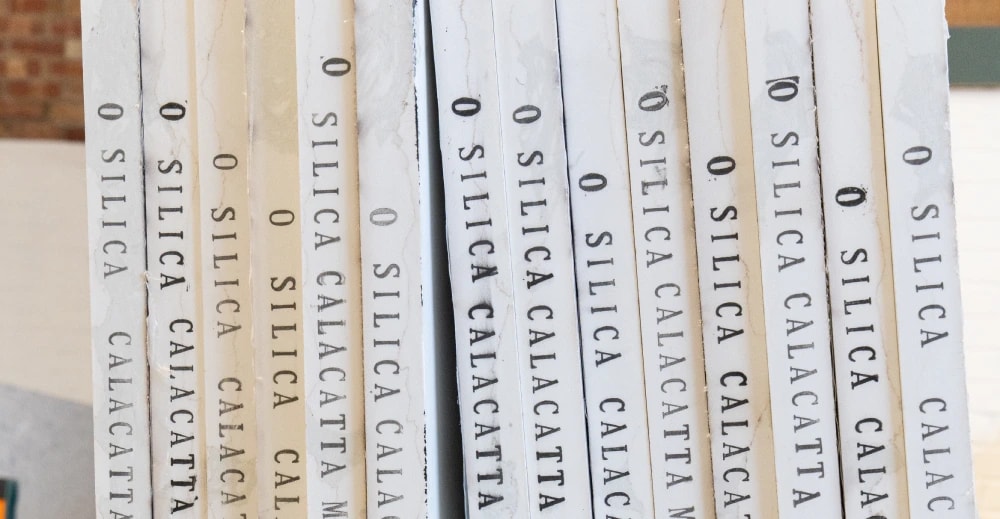
This is the thinking behind Elorā, a 0% crystalline silica surface created as a modern alternative to traditional quartz. Elorā is the engineered-stone collection from Mo’s Stonex. The company chose this direction as evidence around occupational exposure continued to develop, rather than waiting for regulation to force the question.
Elorā is a mineral surface with 0% crystalline silica. That wording is specific: it refers to crystalline silica content, rather than claiming that the surface contains no form of silica whatsoever. The reassuring part, for anyone weighing up a new kitchen, is how little is given up in return. Elorā keeps everything you would expect of a premium engineered stone: a non-porous finish that resists stains, scratches and heat, needs no sealing, and asks little in the way of maintenance. The difference lies in the composition, not the performance. In the company’s own words: 0% crystalline silica, without lowering the standards.
Everything is measured, cut, finished and quality-checked in Britain, and the engineered and sintered surfaces carry a lifetime warranty. For those who prefer natural character, the range extends to quartzite and marble under the Terra name, and to heat- and UV-resistant sintered stone under Sinterra. Sinterra sits in a different material category from engineered quartz and was excluded from Australia’s engineered-stone ban. This does not remove the need for appropriate fabrication controls: every stone and mineral surface should be cut and finished using responsible dust-control measures.
For a plain-English explainer of the material, see what 0% crystalline silica means; browse the Elorā collection; or read our practical guide to worktops with 0% crystalline silica.
Design, reconsidered
There is something quietly British about this shift — less a marketing flourish than a matter of doing the decent thing, without fuss. Good design has always been about more than appearance; increasingly it is also about honesty regarding what a material asks of the hands that shape it.
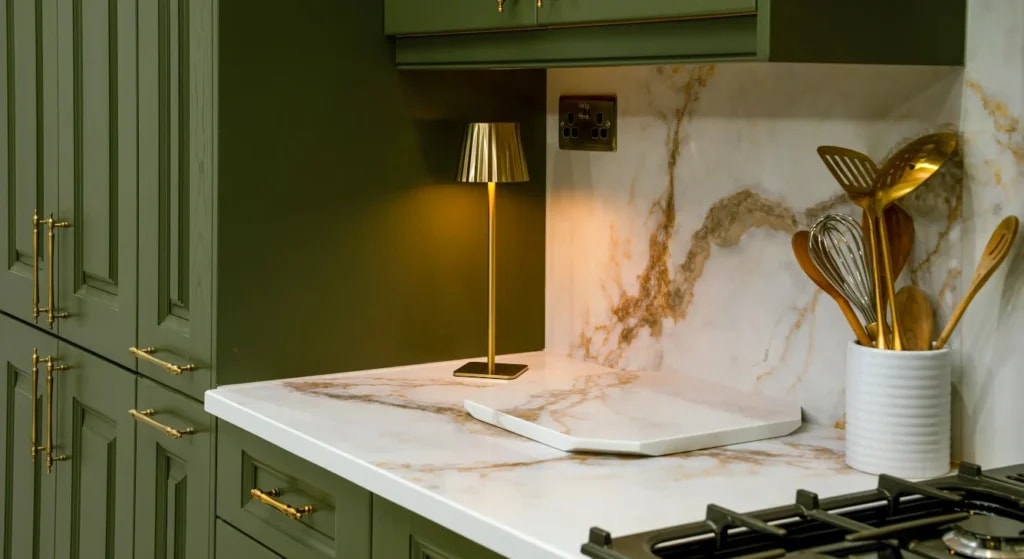
Choosing a worktop remains a pleasure of texture, tone and light: the soft grey drift of a Calacatta, the warm gold of a Macchia Vecchia, the clean calm of a limestone surface. What has changed is that the choice can now be made with a clearer conscience. The surface at the heart of your home need not carry a hidden cost — and that, more than any single slab, is the real mark of a kitchen well made.
To explore the surfaces, or to see full-size slabs in person, Mo’s Stonex welcomes visitors at its galleries in High Wycombe, Watford and New Malden.
Sources
- Health and Safety Executive (HSE), guidance on silica dust and stone worktops; HSE characterises silica dust as the biggest risk to construction workers after asbestos.
- Crystalline-silica content — natural granite and marble c. 5–40%; engineered “quartz” up to c. 90–97%. (Planning, Building & Construction Today; Safe Work Australia.)
- All-Party Parliamentary Group estimate (2023): c. 600,000 UK workers exposed to silica dust each year.
- 2022 study cited by Safe Work Australia: 22.4% of stonemasons diagnosed with silicosis.
- Safe Work Australia — engineered-stone ban on manufacture, supply and use from 1 July 2024; import prohibition from 1 January 2025; porcelain and sintered stone excluded.
- HSE (2026) — dry cutting of engineered stone deemed unacceptable ahead of a workshop inspection programme.
Note: References to “0% crystalline silica” apply specifically to Elorā, and not to all Mo’s Stonex surfaces, natural stone, sintered stone or installation services.
We believe great design should be safer, more sustainable and made with care. That is the standard we want to set for every product and service we offer.
THE MO'S STONEX TEAM
SHARE THIS
KEY TOPICS
RELATED PRESS
Ready to Start Your Project?
Speak to our team about your worktop, material options, fabrication process or installation requirements.